Tree Removal in Valley Stream, One Piece at a Time
Taking a tree down on a Long Island lot is nothing like dropping one in a field. There's a house on three sides, a fence on the fourth, a service drop across the middle, and a neighbor whose yard isn't yours to drop limbs into. This page covers how we work around all that, and what it costs.
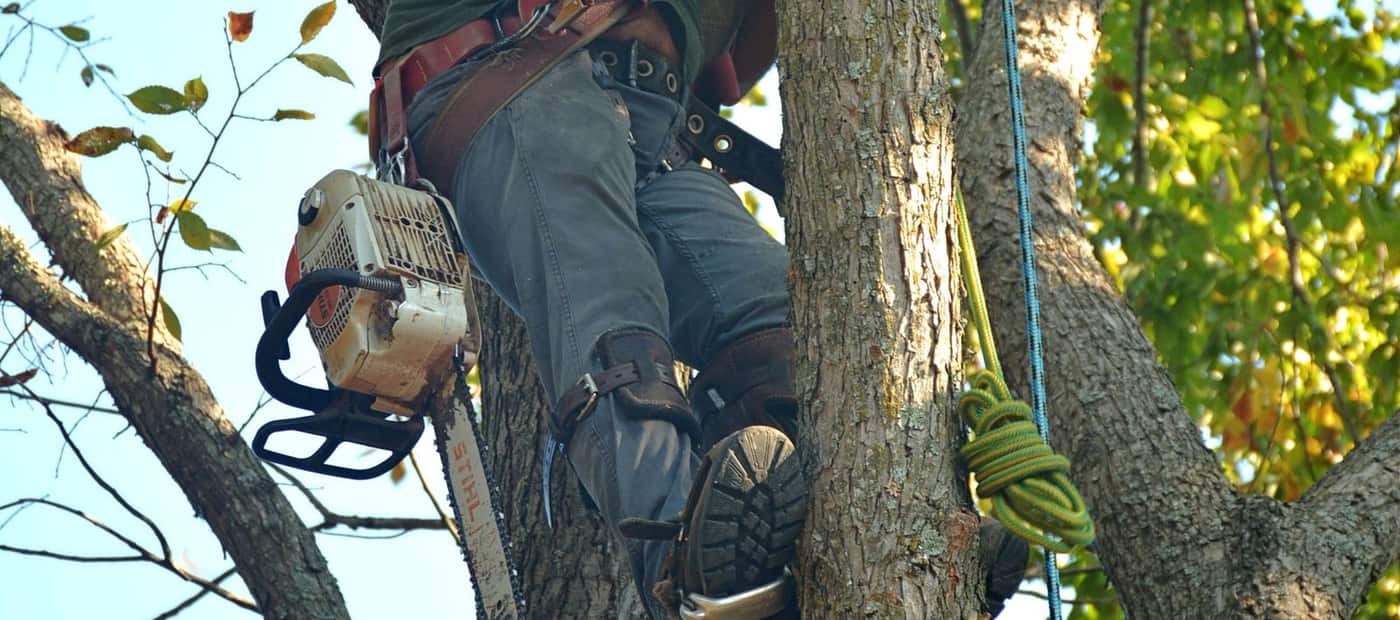
Three ways a tree comes down in Valley Stream
- Climb and rig - a climber takes the tree apart from the top and lowers each section on ropes into the one clear spot. It's the default on a 40-by-100 lot, because there's nowhere to fell anything.
- Crane assist - a crane in the street lifts sections straight up and over the house to the truck. Faster and safer for the big backyard maples and oaks that lean over roofs, and nothing gets dragged through a six-foot side yard. Needs a scheduled date and, inside the Village, a street permit.
- Straight fell - rare here, but a small front-yard tree with open lawn can sometimes come down in one piece. When it can, we'll say so, because it's the cheapest way.
Which trees are coming down around here
Most of the calls are about the same handful of species, because most of Valley Stream got planted in the same two decades. Norway maples with shallow root plates that heave the walk and tip over in saturated ground. Silver maples that grew fast, got huge, and have been dropping limbs since the 1990s. Bradford pears that look fine right up until the trunk splits down the middle at fifteen or twenty years old. London planes that took the brunt of the salt after Sandy and never fully came back. And the big pin oaks and red oaks that are perfectly healthy and have just outgrown a postwar lot.
Not every tree on that list needs to go. A leaning Norway maple over a driveway is a different conversation from a healthy oak that's just big. Not sure which yours is? Our guide on signs a tree is dying walks through the checks. We'll tell you which one you've got, and sometimes the answer is that a hard prune buys ten more years for a fraction of the cost.
Wires, permits, and the neighbor's fence
PSEG Long Island. By law, nobody but the utility's own line-clearance crews can work within ten feet of the primary lines. If your tree is in that zone, the removal goes through PSEG first, usually with four to six weeks of notice. On the day, their contractor cuts the dangerous side and we take the rest. The lower service drop to your house is a different story. PSEG doesn't trim those, and we work around them all the time.
The Village permit. Inside the incorporated Village, Chapter 90 of the code requires a Public Works permit to remove a tree on private property, not just the curb strip. It's $25, a village tree specialist looks at it, and you either plant a replacement tree within a year or put $100 to $500 into the tree fund. In North and South Valley Stream, the Town of Hempstead owns the curb trees and the yard is yours. We'll walk you through whichever one applies so nothing gets held up.
The neighbor. If the only place to lower a section is over the fence, we ask first. PSEG's own rules make anything lowered into a neighbor's yard the homeowner's problem, and we'd much rather have that conversation before the limb is in the air than replace a fence after.
Tree removal in North and South Valley Stream
The hamlets are a different jurisdiction and a slightly different job. North Valley Stream (the streets around Dutch Broadway, Linden Boulevard, and both sides of the Southern State) and South Valley Stream, which is Mill Brook and North Woodmere, sit outside the incorporated Village. That means no Chapter 90 permit for a tree in your own yard; the Town of Hempstead only gets involved for the curbside trees, which are theirs. What doesn't change is the geometry: same postwar lots, same seventy-year-old maples, and in Mill Brook's 1950s section the utility lines run through the backyards, so a removal back there starts with a PSEG conversation before a saw comes out. Same crew, same written estimate, one fewer form.
What tree removal costs in Valley Stream
Long Island runs well above the national cost guides. Mature trees on small lots, wires overhead, disposal, and New York labor all go into it. Ranges for Nassau:
- Small, under 30 feet: $300-$800
- Medium, 30 to 60 feet: $600-$1,700
- Large, 60 feet and up: $1,000-$2,300, and $1,500-$3,500 when it's over the house, in the wires, or needs the crane
- Stump grinding, if you want the stump gone too: usually $150-$500, priced by the inch. Details on the stump page.
Every estimate is written and itemized: removal, stump, haul-away, permit. The cheap quote in this business is usually the one that leaves haul-away off and surprises you with an oak in the driveway. After Sandy, homeowners around here got handed five-figure bills for a single tree. Get it in writing, from someone who'll still be in Nassau next year.
Removal questions
How long does a removal take?
A small front-yard tree with room to work: a couple of hours. A big backyard maple coming down in pieces over a roof: most of a day. Crane jobs are often quicker on site but need the street permit and a scheduled date. We'll put the plan and the time on the estimate.
What happens to the wood and the mess?
Everything gets chipped or hauled unless you want firewood rounds left, and we'll cut those to length for you. Haul-away is in our number. Watch for quotes that leave it out, because a dropped oak is a lot of wood to be left with after the truck pulls away.
Will you damage the lawn or the fence?
Rigging exists so we don't have to. Pieces come down on ropes into the one spot we've cleared, plywood goes under anything heavy on the lawn, and a crane lifts over fences instead of through them. On a tight Valley Stream lot that care is most of the job.
Tree already down or hanging? That's the emergency page. Otherwise, a free estimate takes one visit: we stand under the tree, measure what's there, and write it up. Call (516) 619-3667.